The wiring closet that runs hot, and what to do about it
Airflow in a packed enclosure, why cable management is a thermal job before it is a tidy one, and how a switched PDU saves the trip across the site.
Every piece of equipment in a closet turns its power draw into heat. A rack pulling 900 watts is a 900 watt heater running around the clock in a room with the door shut, and the equipment in it has a temperature above which it stops behaving.
Front to back, and nothing crossways
Our enclosures move air front to back because that is the direction the equipment inside moves it. Every deviation from that costs you. A blanking panel over an empty U is not tidiness: without it, hot exhaust from the back loops around through the gap and gets pulled straight back into the intakes. We make blanking panels in every size for that one reason.
The same logic applies to the door. A solid door on a rack with active equipment behind it traps the exhaust. Our vented and mesh doors exist because the air has to leave, and a closet with the enclosure door shut and no path out is the most common overheating case we hear about.
Cable management is a thermal job
A mat of patch cords across the back of a switch blocks the exhaust as effectively as a panel would. This is why we build vertical cable managers and horizontal fingers, and why the 0U vertical channels down the side of a cabinet are worth the space they take: they keep the bundle out of the airflow entirely.
Get the permanent runs onto a patch panel in 12, 24 or 48 port form and the daily mess reduces to short cords between the panel and the switch, one U apart. That is a bundle you can route out of the way and leave alone.
Sizing the enclosure
We build from 1U shelves and 4U wall boxes up to 42U and 45U floor cabinets. The number people get wrong is depth, not height. A switch is shallow, a server is not, and a battery backup is both deep and heavy. Measure the deepest thing you own, add room behind it for the cords to bend, and pick the depth from that.
Weight has its own rule. A loaded cabinet with a UPS at the bottom is heavy enough that the floor matters, and the heavy items go low. A wall mount box with a battery unit in it needs to reach studs, and a 22U open frame bolted to drywall is a repair job waiting to happen.
Power in the rack
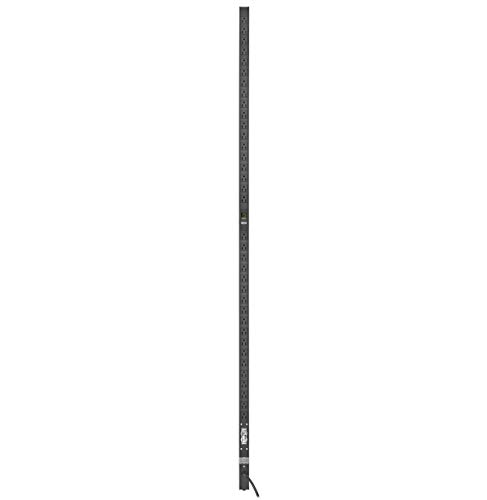
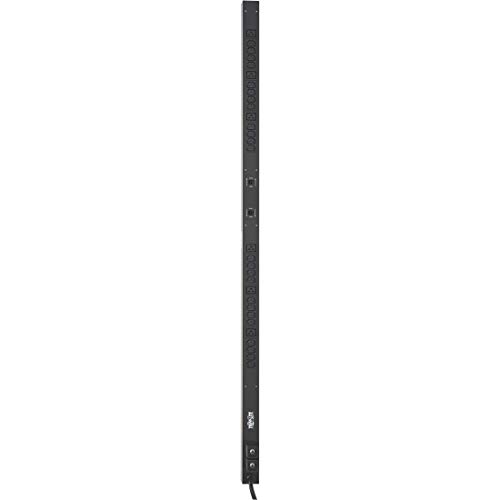
Our rack PDUs come in 15, 16, 20, 30, 32 and 40 amp versions, and the number to match first is the circuit feeding the closet, not the equipment. A 30 amp PDU on a 20 amp circuit is a breaker that trips at the worst time.
Beyond basic distribution, the metered versions display the actual draw on the front. Fitting one and reading it beats calculating from labels, because label figures are maxima and the real number is usually well under. Switched versions go further and let you cycle an individual outlet across the network. Where the closet is at another site, that one feature is the difference between a reboot and a drive.
A short list before the door closes
- Blanking panels in every empty U, without exception.
- Vertical management for the bundle, so nothing crosses an exhaust.
- Heavy items low, and the PDU matched to the circuit rather than the load.
- A vented door, or the door left off. A shut solid door is the whole problem.
- Room to open the enclosure. A rack against a wall is a rack nobody can work on.
Our racks and cooling and rack PDU ranges cover the cabinet, the airflow and the power feed.