Sizing a battery backup to the gear you actually own
Watts, volt-amps and headroom, explained with the numbers printed on our own units. How to add up a bench and land on a model that is not running at its limit.
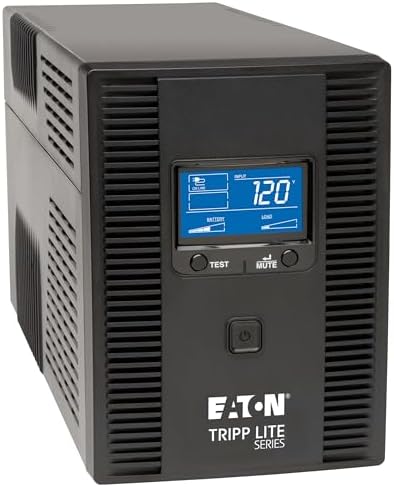
Almost every battery backup we build carries two numbers on the label, and people size against the wrong one. A SMART1500LCDT is a 1500VA unit rated for 900 watts. The volt-amps are the bigger, friendlier number, so that is the one that ends up in the comparison. Watts are the number that decides whether your gear stays up.
Add up watts, not guesses
Every power supply in the room has its draw stamped on it, usually on the same sticker as the serial number. Add those together and you have your load. If you would rather not crawl behind the desk, our load check holds typical figures for the gear that usually shares a circuit and does the arithmetic for you.
Two habits make this go wrong. The first is adding laser printers into the total, which we would ask you not to plug into a battery unit at all: a fuser pulls a hard spike every time it heats, and that spike is what the unit sees. The second is sizing to the exact total. A load that lands on the rated watts leaves nothing for the drive you add in spring.
Leave a quarter of the rating spare
We size our own benches to about three quarters of a unit rating and it has never been the wrong call. A unit running well under its ceiling runs cooler, and heat is what shortens a sealed battery more than cycling does. It also means the next piece of equipment does not force a second purchase.
Working the other way is just as useful. If a 300 watt unit is what fits the budget, then 240 watts is the load it should be carrying, and something on your list has to move to the wall outlet.
The ladder, in our own numbers
The small end of our line is 350VA and 210 watts, which is a router, a modem and one desktop machine, and no more than that. The 550VA units are rated for 300 watts and cover the same desk with a monitor on it. At 1500VA we build both a 900 watt line-interactive unit for a workstation and a 1350 watt double-conversion unit for a rack. The top of the line is 10000VA and 9000 watts, which is a room, not a desk.
Notice that volt-amps and watts do not track each other cleanly across that ladder. Our 1000VA online units are rated for 900 watts, while a 1000VA energy-saving model is rated for 600. Same headline number, half again the real capacity. This is exactly why we ask you to size on watts.
Runtime is a separate question
Watts decide whether a unit carries the load at all. Minutes are a different axis, and they collapse as the load rises. The same battery that holds a light load through a long sag will hold a heavy one for a short one. If your goal is a clean shutdown rather than working through the outage, a few minutes is all the job needs, and sizing for hours is spending money on a use case you do not have.
Where a long hold genuinely matters, our extended-run models take an external battery pack rather than a bigger internal cell. That is the honest way to buy runtime: the electronics stay the size your load needs, and the battery grows.
Before you order
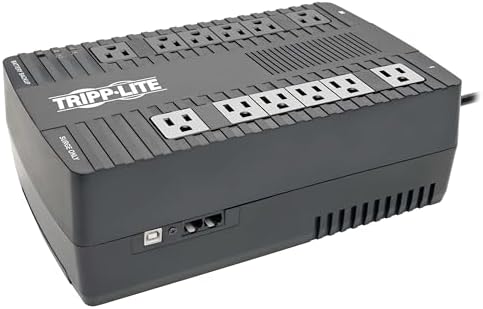
- Count outlets, not just watts. Our units carry between 6 and 12, and only some of them are battery-backed. The rest are surge-only, which is where the printer belongs.
- Check the plug. Above 1500VA the input is often a 5-20P, and a standard 15 amp wall outlet will not take it.
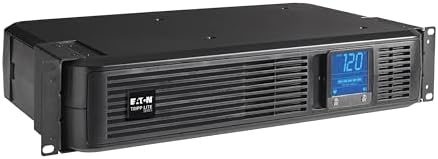
- Measure the depth if it is going in a cabinet. A 2U rack unit is heavy and long, and the door has to close.
- Know that the battery is a wear part. It is replaceable on our units, and planning for that at year three is normal, not a fault.
Once the arithmetic is done, the battery backup line is sorted by what it is rated to carry.